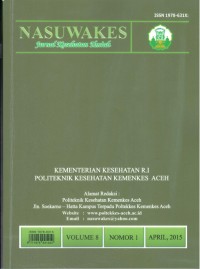
Kesehatan Ilmiah
Pengaruh Penggunaan Ovitrap Dengan Menggunakan Atraktan Biji Jinten 10% Dan Atraktan Gula Pasir Terhadap Keberadaan Jumlah Jentik Aedes Aegypty
Aedes Aegypty is one of vector that should be watched and can cause Dengue Hemorrhagic Fever. One of control by mechanical means namely the use of ovitrap. Ovitrap modifications by using attractants are still rarely carried out in Indonesia. It was necessary to study which of the most effective attractant. One of attractant was cumin seeds 10% and sugar. This study aimed to analyze the effect of number of ovitrap to larvae that can be recommended to the public. This study was experimental with Post test Only Control Group Design. Population and sample was the number of larvae which obtained on a modified ovitrap in 10 homes in Keuramat village. This village had the highest number of dengue cases. Processing and analysis of data using One Way Anova (Anova One Way) and the data were presented using tables and narrative. The findings showed that the ovitrap with cumin seeds 10%, the most popular place for larvae to lay their eggs compared the ovitrap without attractants. The ANOVA test showed that F count > F table (5.610 > 3.354) and p value < 0.05 (p = 0.009 < 0.05), which means there was influence between modified ovitrap to the number of larvae with confidence level = 0.05. Keywords: Aedes aegypty, ovitrap, attractants, cumin seeds, sugar.
Ketersediaan
Tidak ada salinan data
Informasi Detail
- Judul Seri
-
-
- No. Panggil
-
-
- Penerbit
- : .,
- Deskripsi Fisik
-
-
- Bahasa
-
Indonesia
- ISBN/ISSN
-
-
- Klasifikasi
-
NONE
- Tipe Isi
-
-
- Tipe Media
-
-
- Tipe Pembawa
-
-
- Edisi
-
Vol. 8. No. 1
- Subjek
-
-
- Info Detail Spesifik
-
-
- Pernyataan Tanggungjawab
-
-
Versi lain/terkait
Tidak tersedia versi lain
Lampiran Berkas
Komentar
Anda harus masuk sebelum memberikan komentar
 Karya Umum
  Filsafat
  Agama
Agama  Ilmu-ilmu Sosial
  Bahasa
  Ilmu-ilmu Murni
  Ilmu-ilmu Terapan
  Kesenian, Hiburan, dan Olahraga
  Kesusastraan
  Geografi dan Sejarah